













Why Healthcare’s Biggest Problem Isn’t Data – It’s Disconnected Data
Most healthcare organizations today are not struggling with a lack of data.
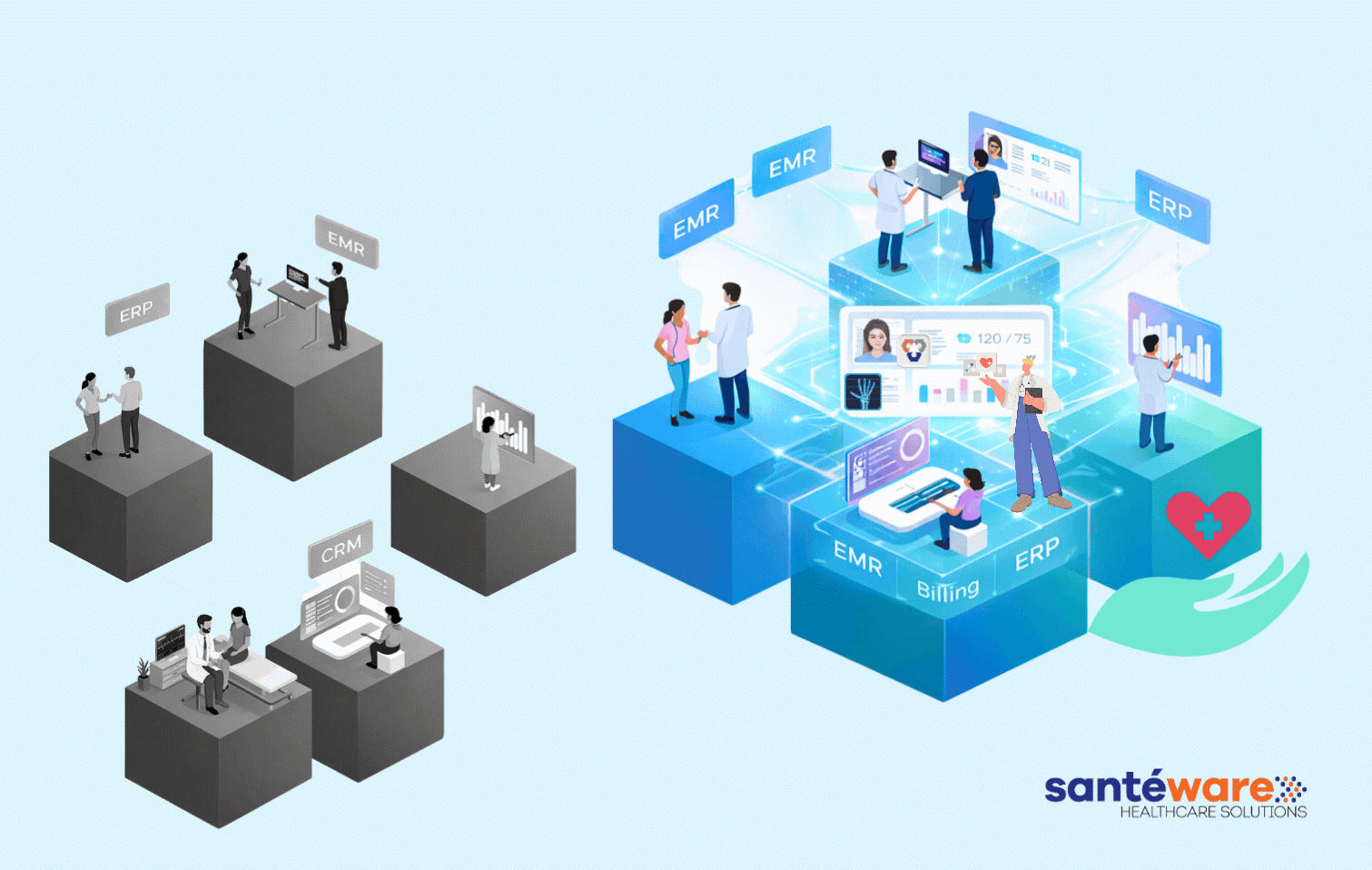
They’re struggling with too much data — spread across too many systems.
🏥 EMRs hold clinical records
💳 Billing systems track revenue
⚙️ ERP systems manage operations
🗄️ Legacy platforms store years of historical data
Individually, each system works.
Together, they don’t.
The Hidden Cost of Fragmentation
On the surface, fragmented data looks like an IT inconvenience.
In reality, it impacts everything:
- Clinicians don’t get a complete patient view
- Decisions are delayed due to missing context
- Compliance becomes harder to manage and audit
- Data quality issues multiply across systems
- Analytics and AI initiatives fail to deliver real value
Most importantly:
👉 Care becomes fragmented because data is fragmented
Why This Problem Keeps Getting Worse
Healthcare systems have evolved over years — sometimes decades.
New tools get added.
Old systems never fully go away.
Integrations are built… but rarely standardized.
The result is a growing ecosystem where:
- Data is duplicated
- Formats are inconsistent
- Systems don’t speak the same language
- Historical data becomes harder to access and use
Even when organizations attempt consolidation, they face:
- Massive data volumes (TBs to PBs)
- Incomplete and inconsistent legacy data
- Complex integration challenges
This is not just a technology issue.
It’s a structural problem in how healthcare data is managed.
Introducing DataHive by Santeware
Instead of replacing systems, what if healthcare organizations could connect, standardize, validate, and intelligently utilize existing data?
👉 This is where DataHive by Santeware comes in.
DataHive by Santeware is designed as a scalable healthcare data foundation that enables organizations to unify fragmented clinical, financial, and operational data across EMR, RCM, ERP, and legacy systems into a single connected ecosystem.
The platform helps organizations:
🔄 Integrate and normalize data across disconnected systems
👤 Create longitudinal, patient-centric data views
🔗 Standardize interoperability using HL7 and FHIR
✅ Improve data quality, validation, and governance
🔐 Enable secure access to healthcare data across teams and use cases
At its core, DataHive by Santeware acts as a processing and intelligence layer — not another system of record
This allows healthcare organizations to unlock value from their existing infrastructure without disrupting current operations.
Beyond Integration: Making Data Actually Usable
Unifying data is only the beginning.
DataHive by Santeware is built to go far beyond traditional archival or integration platforms by enabling:
- AI-powered and NLP-driven search across structured and unstructured data
- RAG-based intelligent query experiences
- Data validation and reconciliation workflows
- PHI tokenization and de-identification capabilities
- Advanced analytics across clinical, operational, and financial domains
- Enterprise patient identity resolution (EMPI)
- Coding standardization support across healthcare systems
The goal is simple:
Transform healthcare data from something that is merely stored into something that becomes usable, actionable, and intelligent.
Built for Real-World Healthcare Complexity
Healthcare environments are complex — and DataHive by Santeware is designed with that reality in mind.
The platform supports:
- Large-scale healthcare data environments (TB to PB scale)
- Cloud-agnostic deployment models including AWS, Azure, GCP, and on-premise environments
- HIPAA and GCC-aligned security and compliance models
- Scalable microservices-based architecture for resilience and flexibility
Under the hood, DataHive by Santeware combines:
- Secure ingestion pipelines
- Data normalization and transformation engines
- HL7/FHIR interoperability services
- AI/NLP processing layers
- Analytics-ready data models
- Enterprise-grade security and auditability
Together, these capabilities create a unified healthcare data ecosystem that supports both operational efficiency and future AI innovation.
What This Means for Healthcare Organizations
With DataHive by Santeware, healthcare organizations can:
- Improve clinical decision-making with complete patient context
- Reduce compliance and audit challenges
- Accelerate analytics and reporting initiatives
- Enable AI-ready healthcare data foundations
- Improve interoperability across systems
- Unlock value from legacy and historical data
- Support digital transformation initiatives with confidence
Most importantly:
👉 Move from fragmented systems → connected intelligence → better care
This Is Just the Beginning
Fragmented healthcare data is only one part of the challenge.
In the next blog in this series, we’ll explore:
👉 The real cost of fragmented healthcare data — beyond just storage
And why many healthcare organizations underestimate the operational, compliance, and financial impact of disconnected systems.
Stay tuned to learn more about how DataHive by Santeware is helping healthcare organizations build a smarter, unified, and AI-ready data future.
Let’s collaborate. If you want help exploring how this could fit your environment:
Let’s Talk:
Whether you’re modernizing an EMR, migrating clinical data, or building interoperable solutions using HL7/FHIR, we bring the delivery governance, QA discipline, and healthcare expertise needed to build secure, scalable, and compliant platforms that hold up at scale.
Get in touch with www.santeware.com or teams@santeware.com to learn more.