








Why data models matter
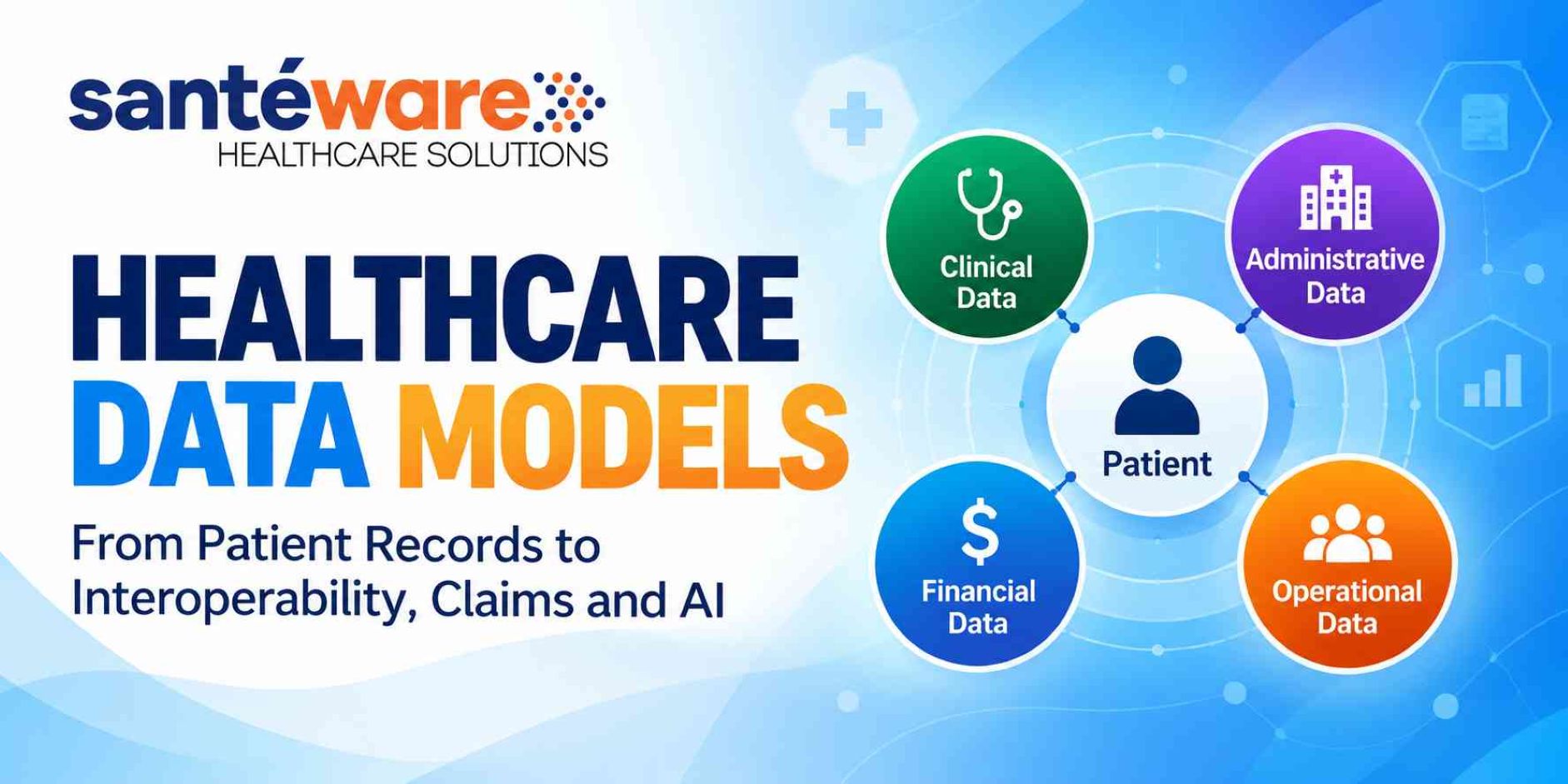
Healthcare information lives in many places: electronic health records, laboratories, imaging systems, pharmacies, billing platforms and research databases. Data models give these systems a shared way to organize information, so it can be understood and used across different workflows.
The right approach depends on the job at hand. Some standards help systems exchange information; others are designed for research, imaging or financial transactions.
Common healthcare data models
| Model or standard | What it is used for |
|---|---|
| HL7 FHIR | Exchanging clinical and administrative data through resources and APIs. |
| HL7 v2 | Messages between healthcare systems, often triggered by events. |
| openEHR | Representing detailed, longitudinal clinical records. |
| OMOP CDM | Preparing observational healthcare data for research and analytics. |
| PCORnet CDM | Supporting patient-centred clinical research. |
| i2b2 | Clinical data warehousing and cohort discovery. |
| USCDI | A defined set of US healthcare data elements and classes. |
| X12 EDI | Administrative and financial transactions, including claims and remittance. |
| DICOM | Medical images and related information. |
How the pieces fit together
A typical healthcare data environment starts with source systems such as EHRs, labs, radiology, pharmacy, billing and payer platforms. An integration layer then validates, maps and transforms the incoming data. The information can be sent to operational databases, analytics platforms, research environments or reporting tools.
Standards such as FHIR, HL7 v2, X12 and DICOM serve different purposes within this flow. Terminology mapping and security controls help keep the information consistent and protected as it moves between systems.
FHIR resources at a glance
FHIR organizes information into modular resources. Common examples include:
- Patient — identifying and contact details.
- Encounter — a visit or interaction with a healthcare provider.
- Condition and Observation — diagnoses, measurements and clinical findings.
- MedicationRequest and Procedure — prescribed medicines and procedures.
- Claim, Coverage and Payment — insurance and billing information.
Consistent codes matter, too
Data structure alone is not enough. Terminologies and code sets help systems use the same meaning for clinical concepts. Examples include ICD-10-CM and ICD-11 for disease classification, SNOMED CT for clinical concepts, LOINC for laboratory tests and observations, RxNorm for medications, CPT/HCPCS for procedures, CDT for dental procedures and NDC for drug products.
Choosing the right model
Start with the intended use. FHIR may suit data exchange, HL7 v2 may fit established messaging workflows, OMOP CDM or PCORnet may support research, DICOM handles imaging, and X12 EDI supports administrative transactions. Many organizations use several standards together rather than relying on one model for everything.
Working on healthcare interoperability or data modernization?
Learn more at santeware.com or email teams@santeware.com.
Contact Santeware to discuss your requirements.